Will AI take your job? It's one of the most common concerns people have about artificial intelligence. But how much of it is true, and how much is simply hype? In this article, we'll take an honest look at what's really changing—and what you can do to turn AI into an advantage instead of a threat.
Introduction
You've probably heard the question before. A colleague mentions it, a headline grabs your attention, or it simply lingers in the back of your mind: Will AI eventually make my job obsolete?
It's a completely valid question—and it deserves an honest answer.
So let's look at what's actually true, and what isn't.
Where Does This Fear Come From?
Over the past couple of years, AI has advanced at an incredible pace. After the launch of ChatGPT, many people saw an AI tool that could write, translate, code, and analyze information in just minutes. It's no surprise that this raised concerns.
The media hasn't helped much either. Headlines claiming that "millions of jobs will disappear" attract far more attention than a balanced explanation of what's really happening. As a result, the conversation often becomes distorted and unnecessarily alarming.
What Is Actually True?
There are tasks that AI can already perform today that were previously done by people. That's a fact.
Repetitive, well-defined, and data-driven tasks are often completed faster, more consistently, and at a lower cost by AI. Examples include simple data entry, drafting standard documents, basic customer support, and routine administrative work.
If someone's job consists almost entirely of these types of tasks, their role is likely to change.
What's Not True?
Saying that AI will "take your job" is usually an oversimplification.
What's actually happening is that AI is taking over specific tasks, not entire professions.
Take an accountant, for example. Much of their time is spent processing data and preparing recurring reports. AI can make those tasks much faster. But that doesn't eliminate the need for an accountant. Clients still need someone to interpret the numbers, provide advice, build trust, and make informed decisions.
The same applies to graphic designers, customer service professionals, salespeople, and many other roles. AI handles repetitive work, while human judgment, communication, context, and accountability remain essential.
So What Should You Be Concerned About?
Not AI itself.
The real risk is failing to recognize that your job is changing—and not adapting to those changes.
History has seen this before. When computers became common in the workplace, many people feared they would become unnecessary. What actually happened was different: those who learned how to use computers gained a competitive advantage, while those who didn't gradually fell behind.
AI is likely to follow the same pattern.
The question won't be "You or AI?"
It will be "How effectively can you work with AI?"
Which Jobs Are Most at Risk?
To be honest, the most vulnerable roles are those built around repetitive, highly structured tasks that require little human judgment.
Examples include:
Simple data entry and processing
Creating standard documents and template-based content
Basic translation tasks
Certain types of call center and routine customer support work
If your work consists primarily of these activities, it's worth thinking about how you can expand your skills and responsibilities.
Which Jobs Are the Safest?
The safest careers are those where human interaction, judgment, or responsibility is central to the work.
Examples include:
Doctors, psychologists, and coaches, where empathy and trust matter.
Skilled tradespeople and technicians, where physical presence and real-world decision-making are essential.
Teachers and mentors, where personal guidance cannot be fully automated.
Business owners and leaders, where strategy, decision-making, and accountability remain fundamentally human responsibilities.
In these professions, AI is far more likely to become a powerful assistant than a replacement.
What Can You Do Today?
You don't need to become an AI expert.
But it's worth learning how AI can make your daily work easier.
Start by identifying the repetitive tasks that consume the most time—writing emails, summarizing information, researching topics, organizing ideas, or planning projects. These are exactly the kinds of tasks where AI can deliver immediate value.
People who learn to use AI effectively aren't replacing themselves—they're freeing up time for higher-value work.
Summary
Will AI take your job?
Probably not.
Will it change how you work?
Almost certainly.
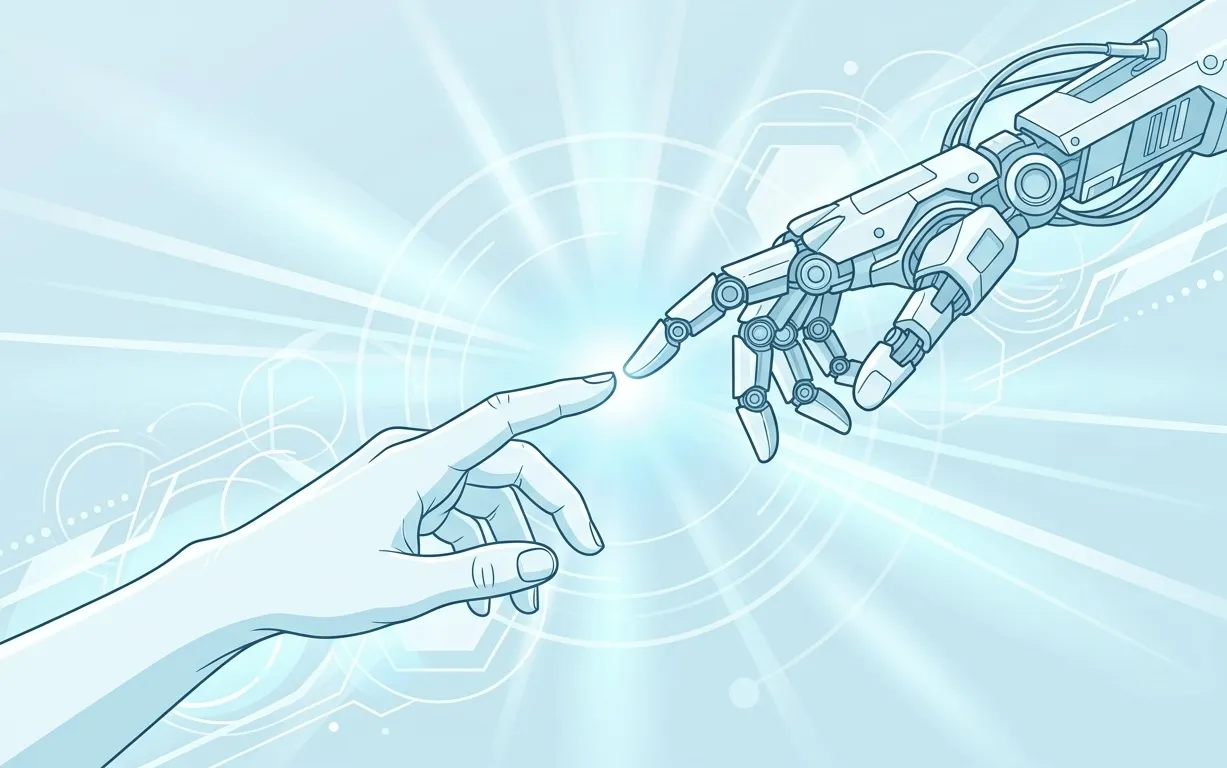
The real question isn't whether you should fear AI.
The real question is whether you'll be ready to work alongside it.