Key Solutions
Real-time processing of in-game data in spectator mode
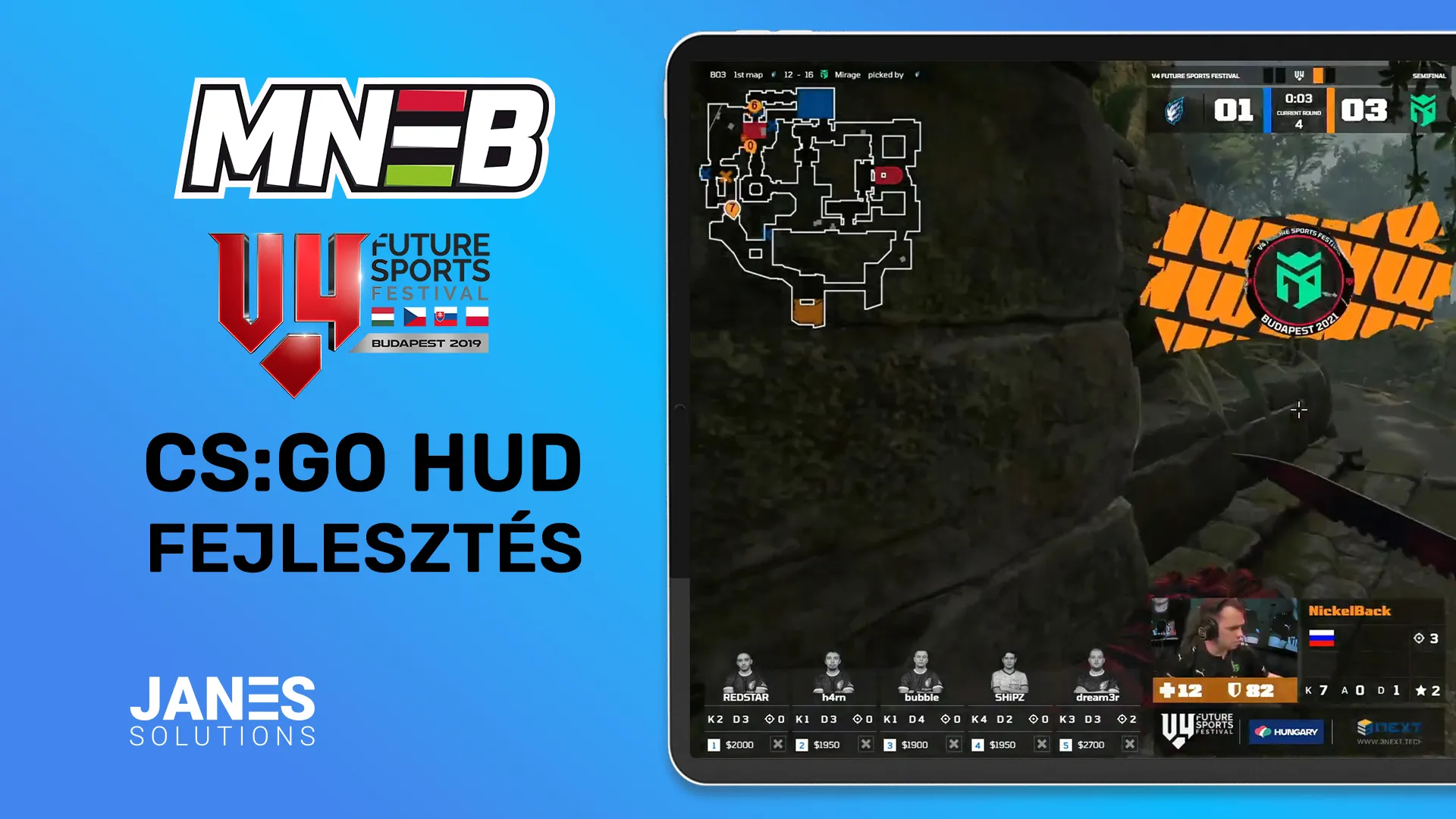
Development of a custom Node.js-based HUD system
Headless Chrome rendering for broadcast environments
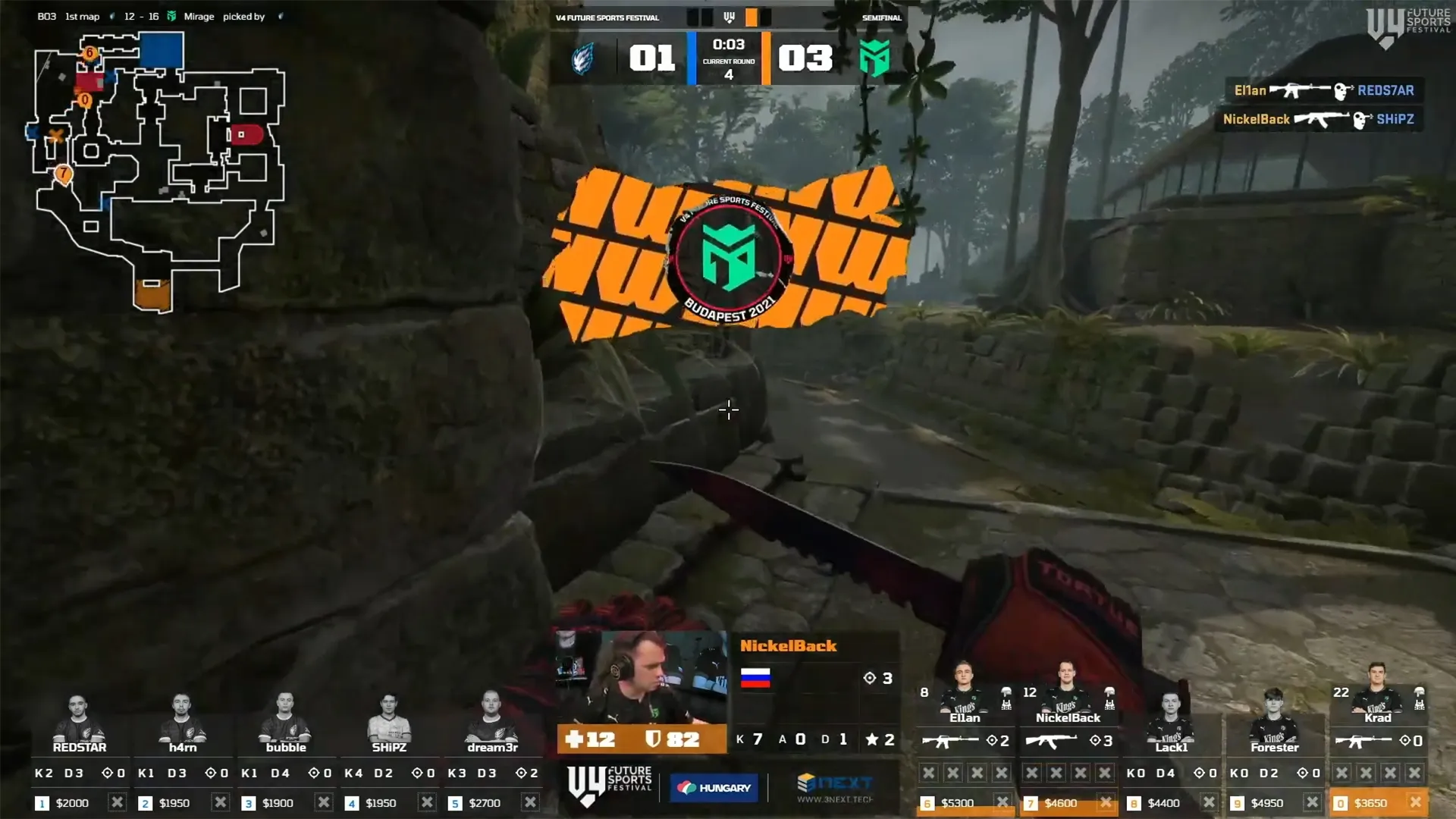
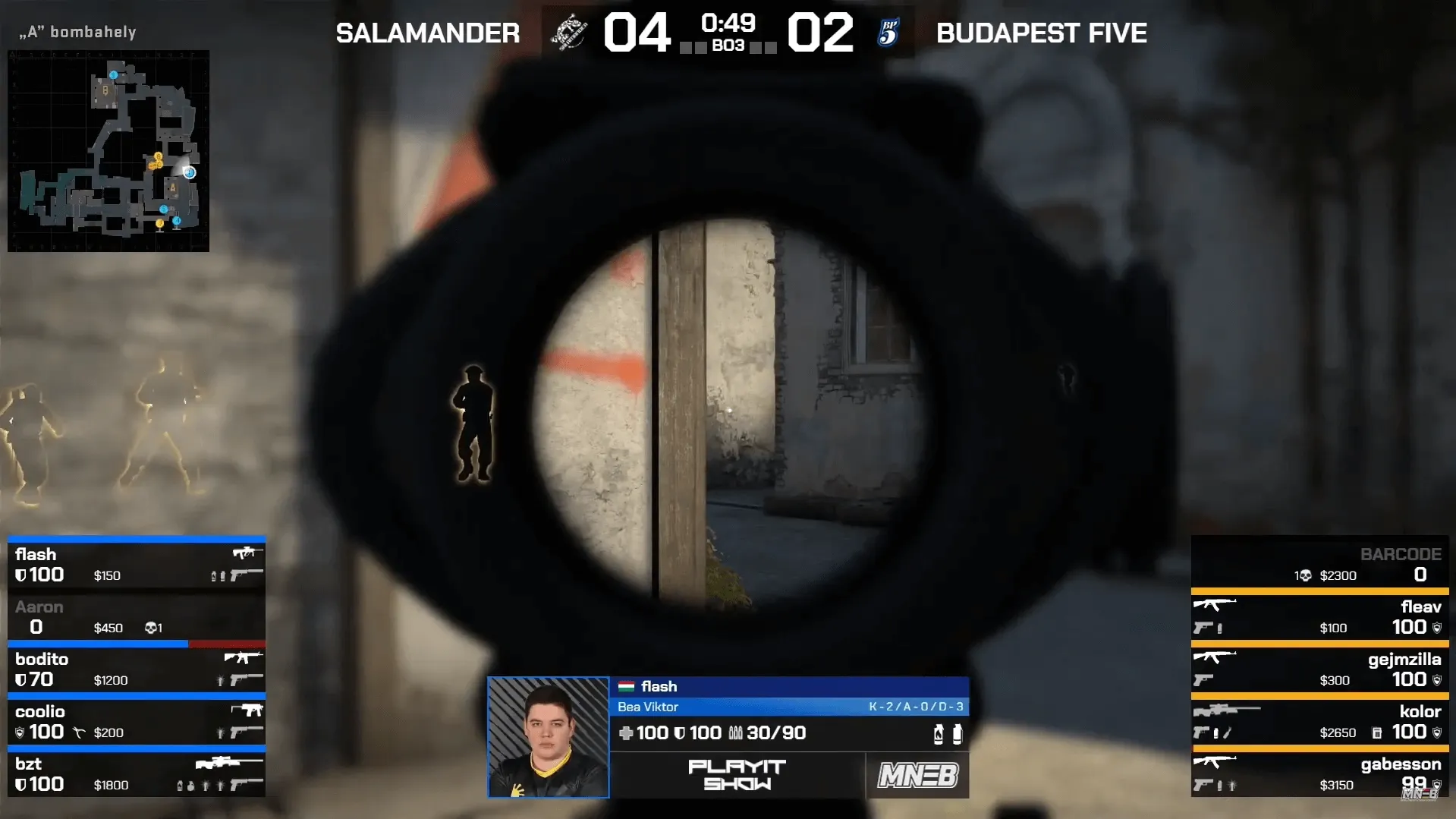
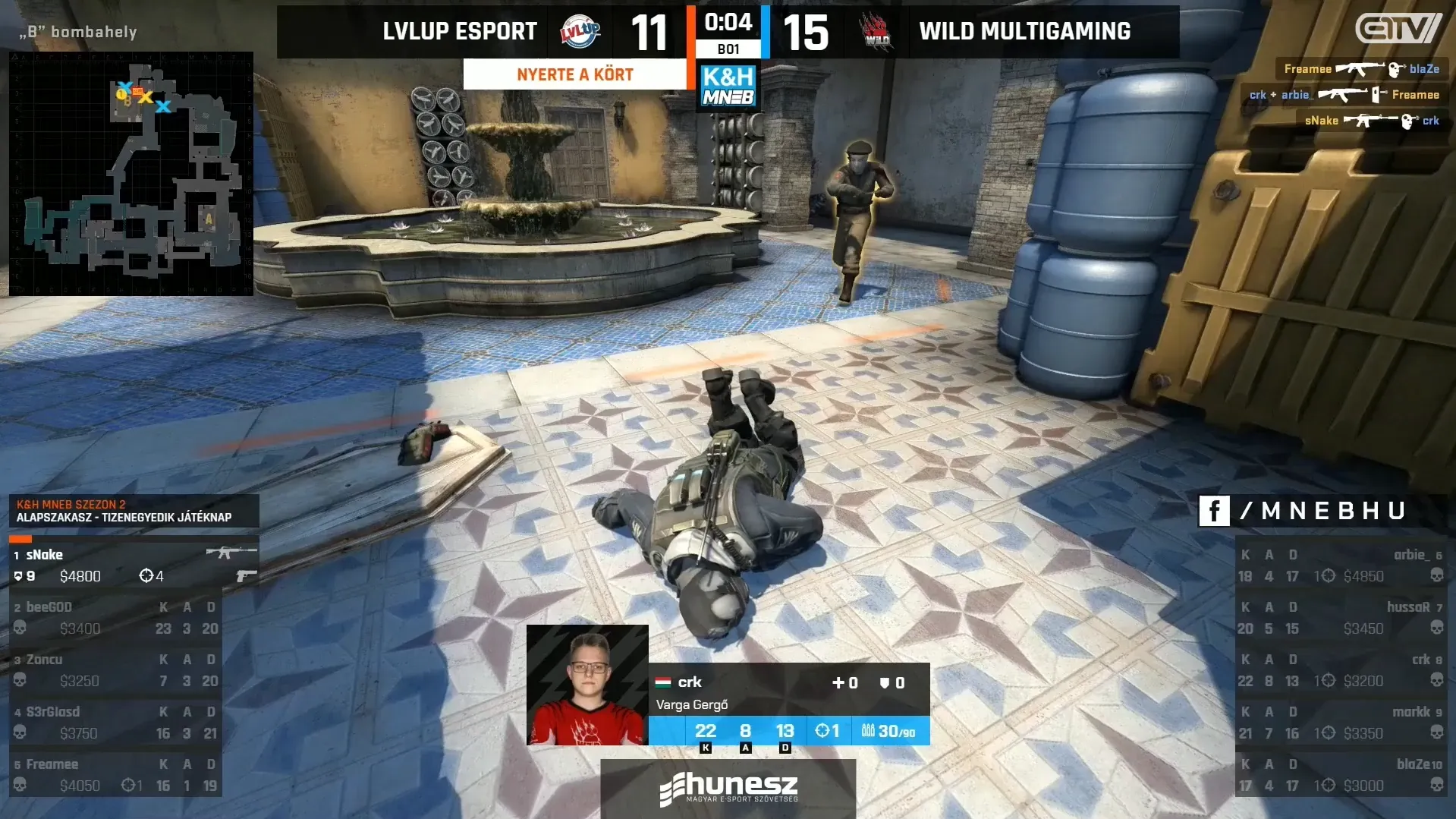
Displaying player data (HP, weapons, statuses, etc.)
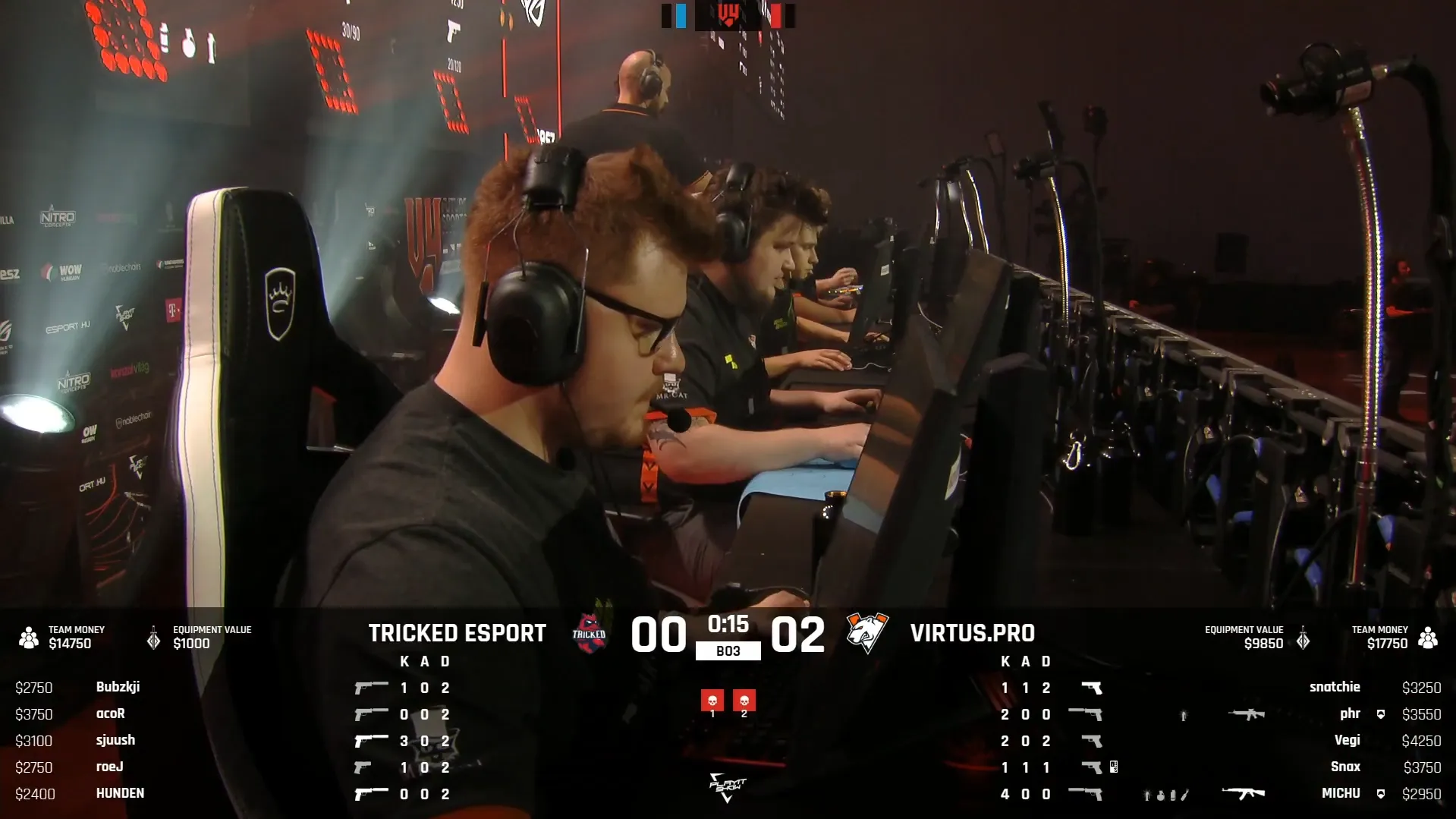
Customizable graphical interface based on client designs
Ensuring stable performance during live broadcasts
Technical Approach
The system processed real-time data streams provided by CS:GO servers through spectator mode. A Node.js application transformed this data into a custom HUD interface, which was rendered using Headless Chrome and integrated into the broadcast system.
This solution allowed standard in-game information to appear in custom event-specific graphical environments aligned with each tournament’s branding and visual identity.
Results
The developed HUD systems were successfully used at multiple esports events, providing stable real-time data visualization during live broadcasts. The system adapted flexibly to different graphical requirements and served as a reliable foundation for live production environments.
Versions
The systems were developed for four different events while I was working under webesports.hu:
V4 Future Sports Festival CS:GO HUD Development — 2019-08-31
MNEB CS:GO HUD Development — 2019-05-09
MNEB 2020 CS:GO HUD — 2020-07-09
V4 Future Sports Festival CS:GO HUD Development — 2022-01-11
Role: Full-stack Development
Technologies: Node.js, Headless Chrome, WebSocket / real-time data processing