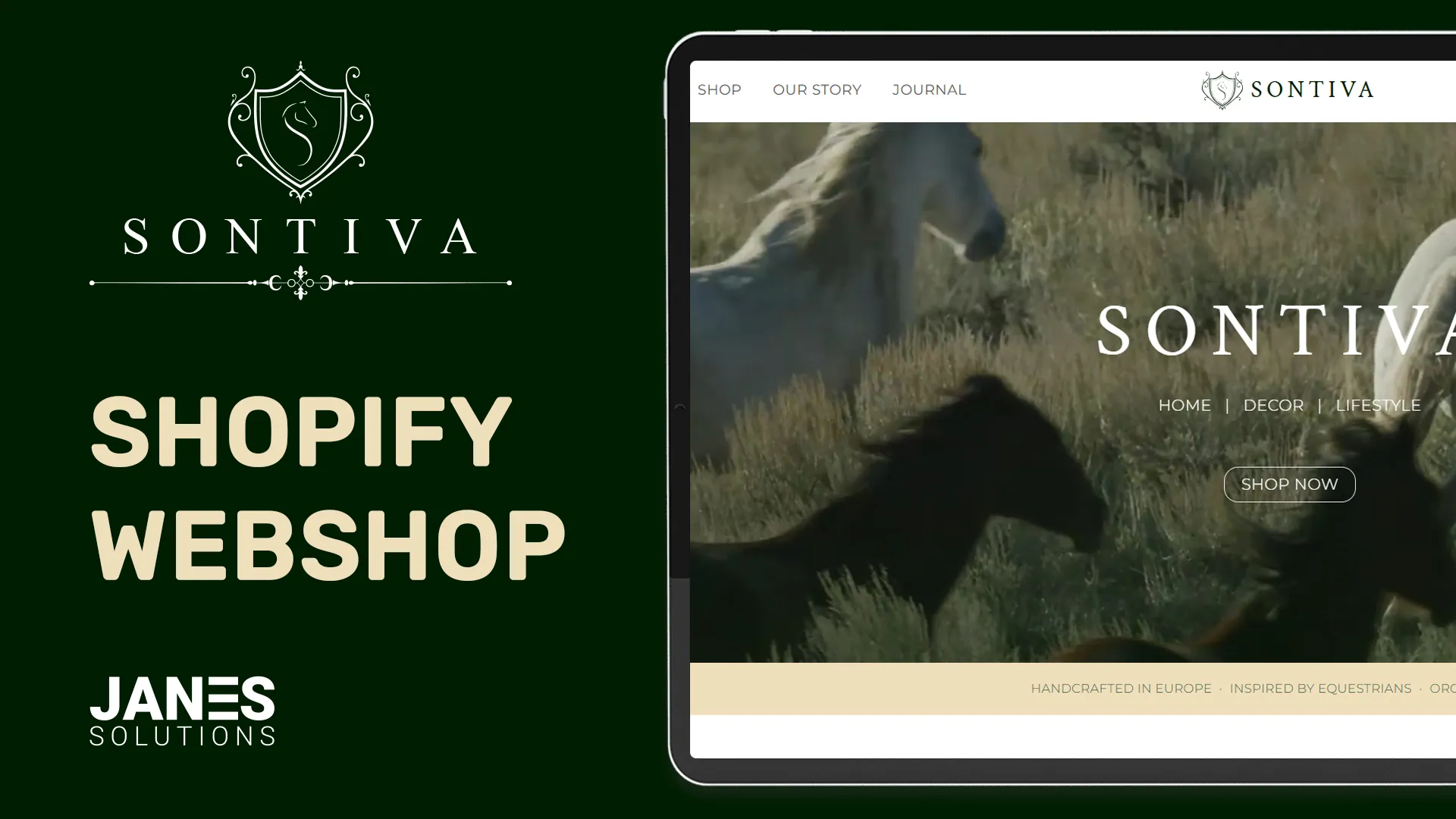
Sontiva is a family-owned business offering premium home accessories and equestrian products. The brand also has a connection to Hungary, as its founder spent much of their childhood around horses and developed a love for this lifestyle while riding through Hungarian forests and fields.
Natural materials play an important role in the products, including wood, leather, travertine, and linen. All products are made in Europe.
The online store primarily targets customers in Belgium, the Netherlands, France, and Germany, so it is available in four languages: English, Dutch, French, and German.
My job was to build a fully customized Shopify store, from implementing the design to integrating the Belgian invoicing and accounting systems.
Shopify Store Development
The designs were created by a designer in Adobe XD, and my task was to turn them into a fully functional Shopify theme.
I used Shopify's Dawn theme as the foundation and customized it based on the provided designs. This meant I didn't have to build everything from scratch, and it also makes future maintenance and Shopify updates easier.
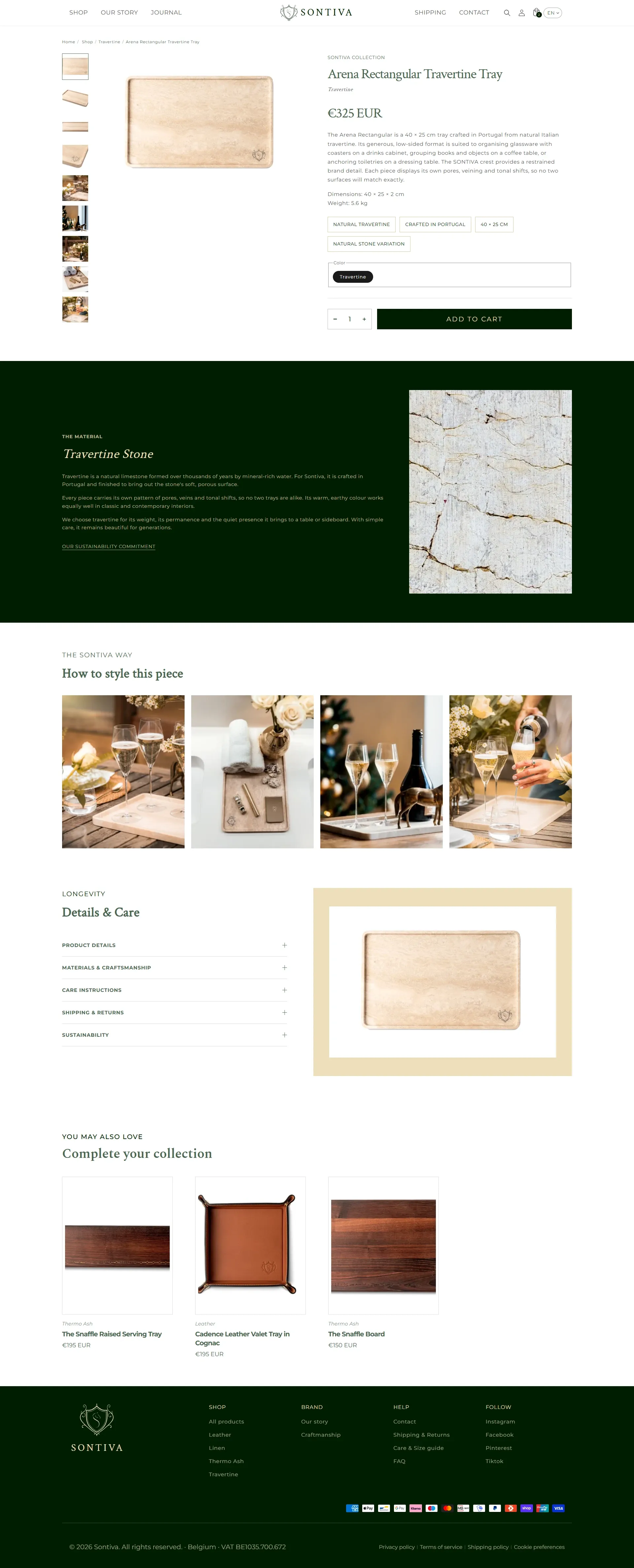
The homepage features an introductory video, featured products, and the brand's story. The product pages include all the usual information, along with details about materials, care instructions, shipping and returns, and product certifications.
I also created dedicated pages for materials, the brand's story, and frequently asked questions, along with the necessary customer service forms.
One important requirement was that the client should be able to manage the store's content independently. That's why texts, images, featured products, and other content elements can all be updated directly through the Shopify admin panel without needing a developer.
Challenges During Development
One of the main challenges was implementing the responsive design. The mobile and desktop layouts were quite different in several places, so some sections needed separate implementations for each screen size.
There were no tablet designs provided, so I had to work out those layouts myself to make sure everything displayed properly across different screen sizes.
Another challenge was that the client was already actively using and editing the store through the Shopify admin panel while development was still ongoing.
This meant I had to be careful not to overwrite any of their changes when deploying updates. Before each deployment, I synchronized the latest live theme and uploaded only the files I had modified.
Belgian Invoicing Integration
From a technical perspective, this was probably the most complex part of the project.
The client wanted Shopify orders to be automatically transferred to the Belgian accounting firm's system and then passed on to the accounting software.
This required connecting several different systems:
Shopify → Webwinkelfacturen → sbbFACT → Exact Online
Transferring the order data itself wasn't particularly complicated, but handling the different VAT rules required much more attention.
The VAT treatment depends on whether the customer is an individual or a business, and whether they are located in Belgium, another EU country, or outside the EU. Each situation can require different VAT codes and invoicing rules.
On top of that, starting in 2026, structured electronic invoicing through the Peppol network became mandatory for most domestic B2B transactions in Belgium.
The necessary VAT codes were configured, and we tested different order scenarios to make sure invoices were transferred correctly between the systems with the appropriate information.
A Few Additional Technical Details
There were also a few other things I paid particular attention to during development:
GDPR: Fonts are served locally or through Shopify's hosting instead of being loaded from Google's servers. This avoids sending visitors' IP addresses to Google just to load fonts.
Pre-orders: Out-of-stock products can be pre-ordered. I implemented this using Shopify's built-in functionality without requiring an additional paid app.
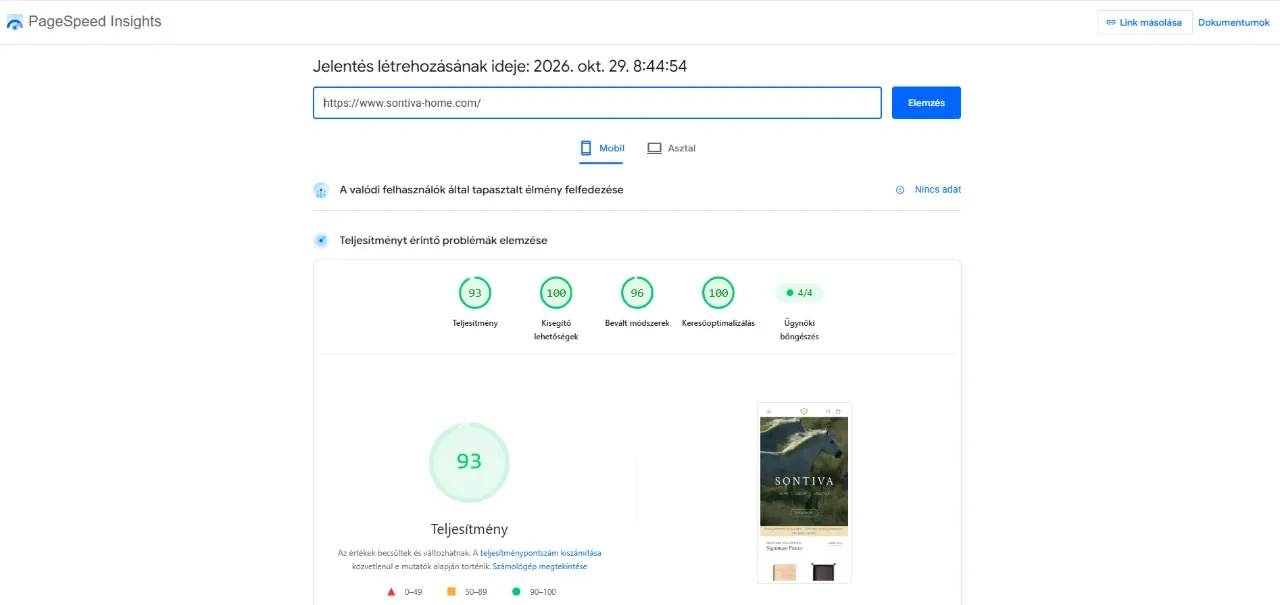
Performance optimization: I optimized images, disabled video loading on mobile devices, and fixed the PageSpeed issues that could reasonably be addressed.
Maintainability: The theme is built on Dawn, and most of the content can be edited directly through the Shopify admin panel.
Current Project Status
The online store is already live at https://sontiva-home.com.
The website development is complete, and the invoicing integration is currently going through its final tests. Once Peppol is activated and the remaining VAT checks are completed, this part will also be ready for production.
Overall, this project involved much more than just building a Shopify theme. Alongside implementing the design, I also worked on multilingual content management, custom frontend solutions, and a Belgian invoicing workflow connecting multiple systems.