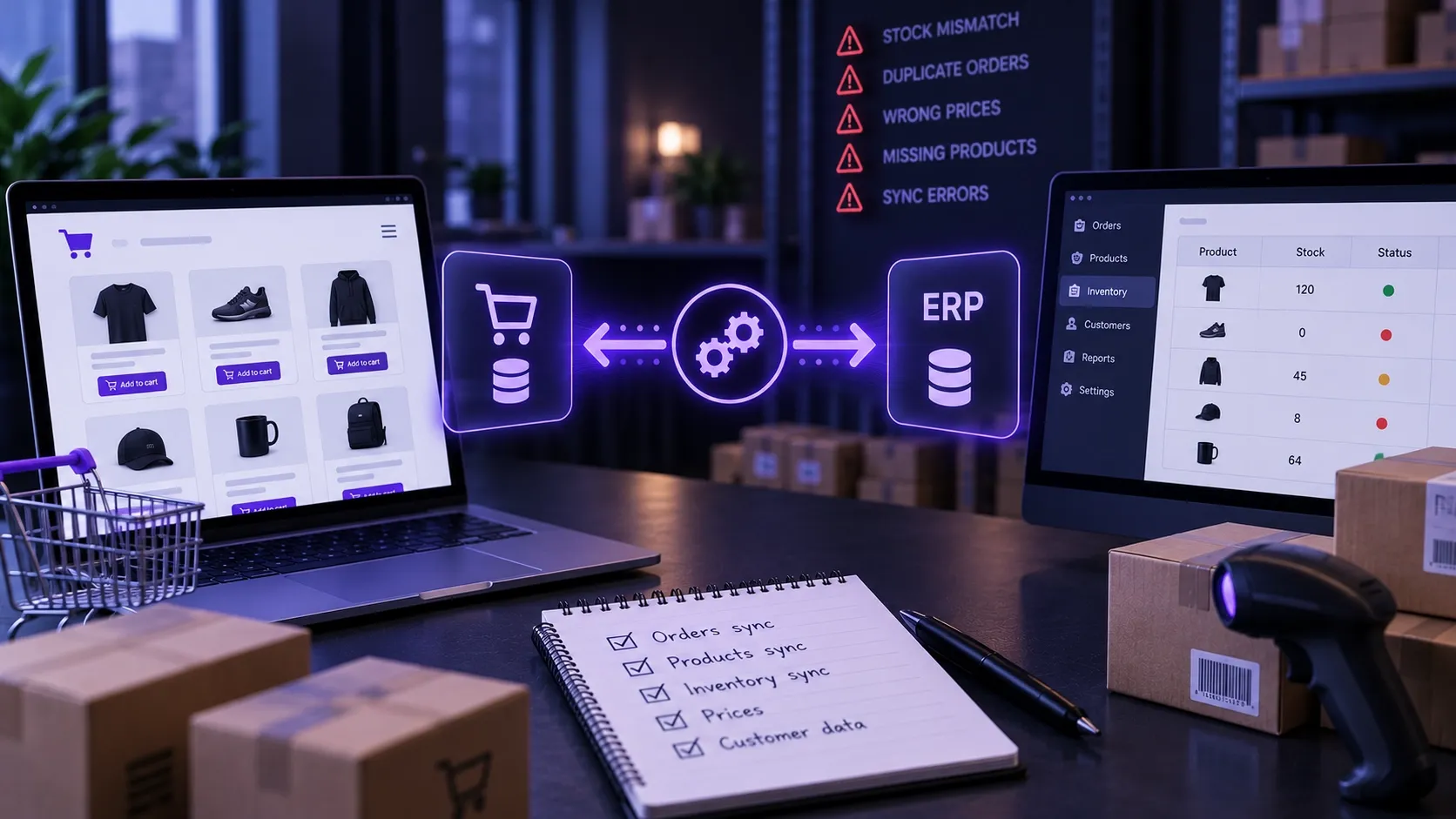
Soon your customer will not browse your store — they will ask their AI assistant. What UCP is, what /.well-known/ucp does on a Shopify store, and what an online store owner should understand about it today.
For the past twenty years online stores have been built around a single question: how does a person find us on Google, and how do we walk them through the purchase. That is what SEO, product listings, filters, abandoned-cart emails and fast mobile pages were for. The buyer was human, and the interface was a browser.
That is starting to change. More and more purchases begin not in a search box but with a request to an AI assistant: „find me waterproof hiking boots in size 45, under 150 euros, from a store that can deliver within three days”. The assistant does not just answer, it starts working: it searches, compares, checks availability, and may go as far as the cart or the payment step. This is what people mean by agentic commerce.
But that needs something that did not exist before: a shared language between online stores and AI agents. One of the emerging standards for it is UCP.
How the path to purchase is changing
It is worth putting the two flows side by side, because the difference is commercial, not technical.
Classic search: a person searches → opens three or four stores → compares → chooses → buys. Here your job is to convince: good photos, good copy, trust signals, a fast page.
AI-driven buying: a person asks → the agent searches and compares → the agent brings them to the store, often with a specific product and price already chosen → the person approves. Here your job is to make sure the agent can understand at all what you sell, at what price, whether it is in stock, and how it can be bought.
That is the meaningful shift: you used to convince a human, now you first have to inform a machine. If an agent cannot reliably read your data, you are left out. Not because you are more expensive or worse, but because you were not legible.
What is UCP?
UCP (Universal Commerce Protocol) is an emerging standard that lets a store describe, in a machine-readable way, what commerce capabilities it has: how products can be searched, how product data can be fetched, how a cart is assembled, how shipping is chosen, and how payment works.
The simplest analogy is robots.txt. Almost no human ever looks at it, yet every site has one, because it speaks to crawlers: what you may index and what you may not. UCP is the same idea one level up, only it is not about indexing but about transacting. It does not say what you may read, it says what you can do here.
This signal lives at a well-defined, standard address: /.well-known/ucp. This is the discovery profile. An agent fetches it first, and learns from it which commerce capabilities the store is compatible with, and where to send its further requests.
What does an AI agent actually see?
It helps to think in four steps, because most stores are not prepared for all four.
1. Discovery. The agent finds the store and checks whether you speak its language at all. Without a UCP profile it falls back to the traditional method: interpreting the text of your public pages, which is slower, less accurate and easier to misread.
2. Product data. Price, availability, size, variants, delivery time. This is where most stores fall down: the size sits mid-sentence in a description, stock is only visible on the product page, and delivery time lives as prose on a separate page. Fine for a human, useless for a machine.
3. Cart. The agent assembles a cart and gets back the real total: discounts, shipping and tax included. If that only becomes clear at the last step, the agent cannot show its user an accurate offer.
4. Checkout. Payment. This is where the genuinely interesting questions start: who approves the transaction, how the buyer is identified, what happens on a return. In most implementations today a human still steps in here, and that will stay true for a while.
What is Shopify doing here?
Shopify is an interesting player because it is not waiting for the market to settle. In September 2026 it updated storefront UCP support to the 2026-08-25 protocol version, meaning that at platform level stores are being prepared to signal, through the /.well-known/ucp discovery profile, which commerce capabilities they are compatible with for AI platforms and agents.
The practical consequence is that most Shopify merchants will not need to write their own protocol implementation. Just as structured data or sitemaps were eventually absorbed into platforms, this is heading the same way. The competition will not be about who implements the standard better, but about whose data behind the standard is cleaner.
What does this mean for a store owner?
Not that you should start a project tomorrow. It does mean that a few things you filed under „someday” have quietly become a commercial risk.
Product data quality. If your variant names are inconsistent, if size or colour only appears in the description, if the same product runs under three different names, an agent will either skip you or represent you badly. Cleaning up data used to be a convenience question, now it is a visibility question.
Honest stock levels. To an agent, „in stock” is a promise. If your sync runs every fifteen minutes and reality differs, that is not just a lost order, it is damaged trust with the platform that recommended you.
Machine-readable shipping and returns. If those live only in a PDF or a long prose page, the information needed for the decision is not available where the decision is made.
Pricing transparency. Hidden costs and fees that only surface at checkout are annoying for a human buyer; for an agent they mean a dropped purchase, because the offer it presented will not hold.
When is this worth working on?
Honestly: it is not what pays your bills today. For most stores agentic commerce is still a negligible share of traffic. So we would not suggest building a strategy on it.
What is worth doing now pays off regardless:
Clean up product data and variants.
Move the important facts out of description prose into structured fields.
Make stock sync reliable.
State delivery times and return conditions where the decision is actually made.
All of these improve conventional conversion too, they have simply gained a second reason.
And keep an eye on your platform. If you are on Shopify, the heavy lifting will likely be done for you and your job is the data. If you run a custom system, you will soon face a decision about whether you want to be visible in this channel at all.
In summary
SEO was about being found by a person. The coming period will be about being understood by an agent. UCP and /.well-known/ucp are the first shared language of that understanding, and Shopify has already moved in that direction.
Optimising an online store will soon be about more than SEO and Core Web Vitals. Cleaning up your data now is not chasing a trend, it is laying a foundation that will show in today's traffic too.